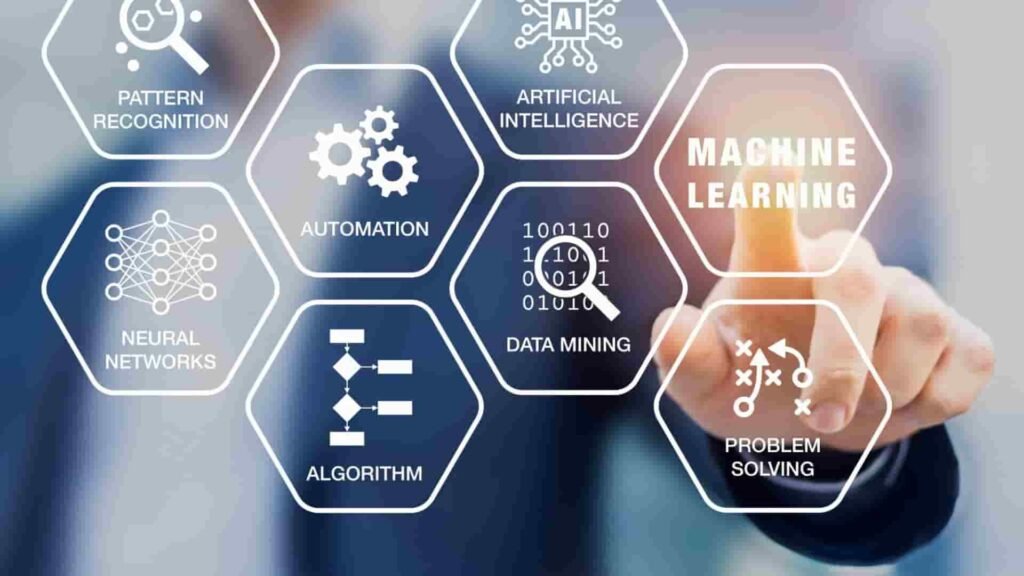
If your business isn’t leveraging artificial intelligence and machine learning in some way right now, you’re likely leaving serious money on the table. That’s not hype. That’s the reality of where the market is heading.
Think about it. Amazon’s AI-powered recommendation engine alone drives 35% of the company’s total revenue. PayPal uses machine learning algorithms to analyze millions of transactions every single day catching fraud before it ever costs them a dollar. These aren’t Fortune 500 secrets anymore. These are tools any business, at any scale, can tap into.
So what exactly can AI and ML do for your business? Let’s break it down no jargon, no fluff.
What Makes AI and Machine Learning So Powerful for Business?
At their core, artificial intelligence and machine learning are about one thing: making smarter decisions, faster. AI processes data and identifies patterns at a scale no human team could match. Machine learning takes it a step further it learns from that data over time, continuously improving its own performance without being explicitly reprogrammed.
The result? Businesses that integrate both technologies see measurable jumps in efficiency, reduced costs, and a stronger competitive position in their market. In fact, 74% of companies report that their AI initiatives meet or exceed ROI targets that’s not a small number.
Now let’s dig into the specific ways these technologies drive real business growth.
1. Smarter Decisions at a Fraction of the Cost
Every business runs on decisions. What to stock, who to target, where to invest. Historically, making those decisions well required either expensive consultants or mountains of manual analysis.
Machine learning changes that equation completely.
With predictive analytics and AI-driven forecasting tools, businesses can model outcomes, predict customer behavior, and evaluate risk automatically and at scale. What used to require a full analytics team can now happen in real-time, at a cost that’s a fraction of what it once was. That means small and mid-size businesses can now compete with the big players in ways they simply couldn’t before.
2. Automating Repetitive Tasks So Your Team Can Focus on What Actually Matters
Here’s something most business owners don’t realize: a huge chunk of their team’s workday is eaten up by repetitive, low-value tasks. Data entry, report generation, security monitoring, classification, auditing the list goes on.
Business automation powered by ML and AI handles all of that seamlessly in the background. AI-powered automation allows businesses to handle initial customer inquiries, adjust bids, recalibrate ad spend, and shift placements in real time all without human intervention.
The practical outcome? Your people stop doing robot work. They start doing creative, strategic, high-value work. That’s where real growth happens.
3. Boosting Operational Efficiency Where It Counts Most
Here’s a mistake a lot of businesses make: they hear about AI and immediately want to apply it to everything. That’s not the right approach.
The smarter move is to identify where you have large volumes of data customer interactions, supply chain logs, website behavior and then ask: can AI or ML help me extract more value from this?
When applied thoughtfully, the most successful organizations achieve 20–30% productivity boosts for junior staff and 10–15% improvements for senior professionals through well-targeted AI implementation. That kind of operational efficiency gain compounds over time, creating a real and sustainable competitive advantage.
4. Making Sense of Unstructured Data
Most business data is messy. Emails, call logs, social media comments, PDFs, customer reviews none of it fits neatly into a spreadsheet. This so-called “unstructured data” often just sits there, unused, even though it holds enormous strategic value.
AI and machine learning are built for exactly this problem. Tools powered by natural language processing (NLP) can read, classify, and draw insights from unstructured information quickly and accurately. Suddenly, that pile of customer feedback becomes a product roadmap. Those call logs become a sales coaching tool.
Businesses that unlock their unstructured data don’t just understand their customers better they make sharper investment decisions and build smarter strategies.
5. Managing Risk Before It Becomes a Problem
Cyber threats are getting more sophisticated every year, and the cost of a security breach has never been higher. Traditional security systems react to threats. AI-powered risk management predicts and prevents them.
Machine learning models continuously analyze behavior patterns across your systems, flagging anomalies and potential vulnerabilities long before they escalate. They’re also highly adaptable you can customize them to match your organization’s specific risk profile, whether you’re concerned about fraud, compliance, data breaches, or operational failures.
The bottom line: AI doesn’t just protect what you’ve built. It gives your leadership team the confidence to make bolder moves, knowing the downside risks are being actively monitored.
6. Personalization That Actually Converts
Generic marketing is dying. Consumers today expect experiences tailored to them their preferences, their behavior, their timing.
This is where AI-driven personalization becomes one of the most powerful growth levers a business can pull. Predictive analytics allows marketers to deliver content before customers even know it interests them businesses like Netflix and Amazon use AI-driven recommendation engines that suggest content or products a customer is likely to enjoy.
For your business, that translates to higher conversion rates, better customer retention, and marketing spend that actually works. You stop guessing who to target and what to say AI tells you, backed by real behavioral data.
7. Customer Engagement That Builds Loyalty
The customer experience is the new battleground for brand loyalty. And ML technology gives businesses a massive edge here.
From intelligent chatbots that handle customer queries 24/7, to personalized follow-up sequences that trigger based on specific user behavior, AI-powered customer engagement is more responsive and scalable than anything a human team could manage alone. Over 80% of businesses now leverage AI tools, with NLP playing a key role in boosting efficiency and the businesses seeing the best results are those treating AI not as a replacement for human connection, but as an amplifier of it.
Better engagement leads to better data. Better data leads to smarter strategy. It’s a virtuous cycle.
The Bottom Line: Where Do You Start?
You don’t need to overhaul your entire operation overnight. The businesses winning with artificial intelligence and machine learning right now aren’t necessarily the largest or most tech-savvy they’re the ones that started, learned, and kept iterating.
Pick one area customer service, marketing personalization, data analysis, risk monitoring and run a focused pilot. Measure the results. Then expand from there.
With the global AI market valued at $391 billion in 2026 and projected to reach $1.81 trillion by 2030, the window to build a competitive advantage with these technologies is open but it won’t stay open forever.
The question isn’t whether AI and machine learning will reshape your industry. It already is. The question is whether your business will be the one leading that change or scrambling to catch up.
